High-Precision Manufacturing With CNC transforms parts from early prototype stages into production with outstanding precision. Shops such as Leech Industries and High Tech Quality Manufacturing show how advanced CNC machining services can work in practical harmony. They rely on 5-axis mills, Swiss machines, wire EDM, and stringent quality systems to achieve precise tolerances.
See How CNC And Manual Machining Work Together
Manufacturers see the value of precision CNC machining, which reduces variability, reduces rework, and improves customer satisfaction. Modern capabilities include high-speed spindles up to 20,000 RPM, extensive tool magazines, multi-axis control up to nine axes, and precision within the +/- .0002″ range.
For U.S. clients seeking reliable CNC machining solutions, Lowrance Machine stands out as a trusted partner. The company’s operations align with industry benchmarks through fast CNC prototyping, ISO-compliant quality controls, and the capability to support both one-off prototypes and large-scale production.
Important Takeaways
- High-Precision Manufacturing With CNC joins prototyping with scalable production while leveraging advanced machine tools.
- Comprehensive CNC machining services cover milling, turning, 5-axis, Swiss, and EDM processes.
- Precision CNC machining improves yield and customer confidence by delivering consistent, tight tolerances.
- CNC machining solutions now handle hard milling, high spindle speeds, and extensive work envelopes.
- Lowrance Machine is a qualified U.S. partner for high-precision projects executed to industry standards.
Introduction To High-Precision Manufacturing With CNC
Advanced machine tools, stringent process control, and modern CAD/CAM systems are integrated in high-precision manufacturing with CNC. The result is a process that moves parts from concept to repeatable production with speed while still meeting strict tolerances and traceability standards.
Defining High-Precision Manufacturing And CNC Integration
High-precision manufacturing centers on repeatable outcomes, strong surface finishes, and exact dimensional control. By applying milling, turning, and multi-axis methods, CNC machining can reach tolerances as tight as +/- .0002″. Validated toolpaths are developed by CAD/CAM programmers so equipment from Haas, DMG MORI, and Mazak can deliver consistent results.
Why CNC Precision Matters Across Major Industries
In aerospace, precise fits are essential for safety and performance. Medical implants depend on traceable processes and ISO 13485-aligned controls for patient safety. Durability in automotive systems depends on consistent part geometry, while electronics demand exact form factors for signal integrity. Across all of these sectors, CNC precision engineering reduces risk and supports faster certification.
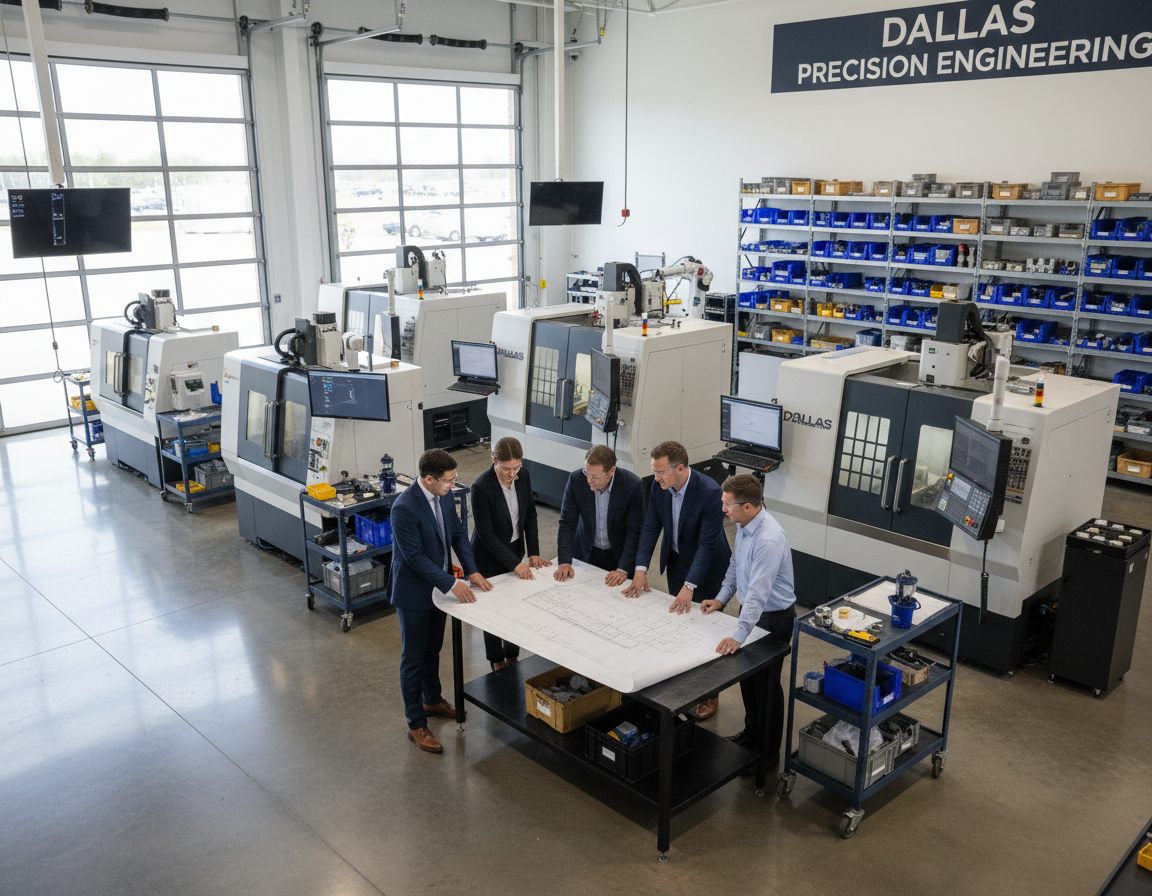
How CNC Lowers Variability And Improves Customer Satisfaction
Computer control, repeatable toolpaths, and automated tool changes substantially cut human error. Rapid CNC prototyping helps test CAD models ahead of production and thereby reduces rework. Consistency is supported through quality assurance tools like CMM inspection and statistical process control. In turn, that consistency builds customer confidence and brand trust.
Lowrance Machine relies on these practices to keep variability low and align with industry standards. Its commitment to high-accuracy manufacturing, finishing operations, and traceable marking helps ensure dependable components for aerospace, medical, automotive, and electronics customers.
CNC Machining Services And Capabilities
Lowrance Machine provides CNC machining services that range from simple prototype work to complex production runs. By combining conventional milling and turning with advanced machining cells, the company serves aerospace, medical, and industrial customers. This approach helps customers find CNC machining solutions that align with their exact requirements.
Available services include CNC milling, turning, drilling, and boring. By using 5-axis machining, shops can approach intricate work from several angles in one setup. Shops often improve cycle efficiency with spindles up to 20,000 RPM and large tool magazines capable of storing as many as 80 tools.
Advanced methods make it possible for shops to tackle more demanding jobs. Multi-axis machining and 3-D high-speed milling make the rapid creation of complex contours. Swiss machining is ideal for small, detailed cylindrical parts often found in medical devices. Fine details and traceability are supported by wire EDM and laser marking, while finishing services like heat treating, welding, and assembly round out the offering.
Machine size plays a major role in determining the scope of the parts a shop can handle. Typical milling capacity can extend to 30″ x 65″, and turning centers may support parts up to 26″ in diameter by 80″ long. Machines with up to nine axes support simultaneous movement, which reduces the need for multiple setups in high-mix, low-volume production.
Advanced machining cells are powered by respected machine tool builders such as Mazak, Okuma, Kitamura, Grob, Haas, DMG Mori, Doosan, and Hurco. The right machine choice is essential when precision CNC machining and repeatable results are the goal.
Lowrance Machine strives to match that level of capability and service. The company blends skilled programmers, advanced inspection tools, and flexible machine layouts to provide CNC machining solutions that shorten lead times and manage costs. Customers benefit from streamlined workflows and single-source accountability for complex parts.
It is wise to ask a provider about spindle specs, tool capacity, axis counts, and examples of similar parts produced. This information helps reveal whether a facility can truly meet the tolerance and surface-finish demands of high-precision and multi-axis work.
Materials Machined With High-Accuracy Manufacturing
The success of high-accuracy manufacturing begins with matching each part to the correct material and process. Material selection affects tooling, spindle speed, cutting fluid, fixturing, heat treatment, and inspection strategy. Capability guidance from companies like Mazak and Haas spans many alloys and medical-grade plastics, helping engineers during prototyping and production alike.
The materials most often machined fall into several families and specialty categories. Below is a table that helps engineers connect material choice with manufacturing strategy by outlining machinability notes, finishing methods, and common uses.
| Family Of Material | Representative Examples | Machining Notes | Common Uses |
|---|---|---|---|
| Aluminum And Copper Alloys | 6061-T6, 7075, C11000, brass | Fast removal rates and strong finishes; tool coatings help longevity; burr formation on thin walls needs attention | Electrical connectors, lightweight components, aerospace housings |
| Stainless And Alloy Steels | 17-4 PH, 304/316, alloy steels | Rigid fixturing is needed; heat buildup must be controlled; passivation and heat treat are common options | Medical instruments, fasteners, structural parts |
| Titanium And Nickel Alloys | Ti-6Al-4V, Inconel 718, Hastelloy | Work hardening and low thermal conductivity require slower feeds and robust tooling | Engine components, exhaust, high-temp applications |
| Tool Steels And Hardened Alloys | A2, D2, H13, 9Ni-4Co-0.30C | Often roughed before heat treat, then finished; grinding or EDM may be used for tight features | Molds, dies, and wear components |
| Exotic And Specialty Materials | Beryllium copper, carbide, copper tungsten, Vespel | Require specialized cutting strategies; accuracy depends heavily on tool geometry and coolant | Insulating parts, vacuum components, high-performance electrical contacts |
| Graphite And Ceramics | Silicon carbide, alumina, machinable graphite | Because of brittle behavior, cutting must stay slow and controlled, and diamond tooling is often preferred | Thermal components, semiconductor tooling, and electrodes |
| Plastics And Composites | UHMW, PEEK, PTFE, medical-grade polymers, carbon fiber laminates | Low melting points require chip evacuation and reduced speeds; delamination must be controlled in composites | Insulators, implant supports, lightweight structural parts |
Specifying exotic materials should trigger early conversations with the machine shop about limits and post-process requirements. Lowrance Machine emphasizes the importance of clear tolerance and finish requirements so tooling, cutting fluids, and post-processing can be planned properly. That clarity supports regulatory compliance and better process planning.
Setup times and cycle planning are directly affected when difficult alloys are machined with precision CNC methods. In the prototyping stage, engineers benefit from testing candidate materials to verify dimensional stability after secondary operations. This reduces the chance of surprises later when the job moves into scaled high-accuracy manufacturing.
Part specifications should clearly identify the exact alloy or polymer grade, the tolerance band, and any necessary certifications. Such detail gives the machine shop what it needs to optimize toolpaths, fixturing, and inspection planning. As a result, the machined material is more likely to meet performance expectations without excessive rework.
Precision CNC Machining Quality And Tolerance Standards
Clear quality and tolerance benchmarks are essential when repeatable parts are the goal. Precision CNC machining shops often outline repeatability expectations, setup methods, and machine features that create process stability. By using large tool carousels, pallet changers, and machines sized appropriately for the work, shops can cut fixture changes and reduce holding-pressure variability.
Achievable Repeatability And Tolerance Levels
When the machine platform is stable and setup demands stay low, modern equipment can hold extremely tight tolerances. Under the right conditions, repeatability as tight as +/- 0.0002″ can be achieved. Tolerance outcomes still vary by material and operation, with milling and turning often holding critical features within a few ten-thousandths.
Inspection Methods And Quality Control
CMM inspection provides dimensional traceability and full reporting options for customers. Statistical process control charts monitor drift and tool wear across repeated runs. Before shipment, visual checks and functional tests help confirm fit and finish. CNC machining specialists regularly share inspection reports, CMM plots, and SPC records to verify each batch.
Important Regulatory And Certification Considerations
Documented systems and strong compliance are essential in medical and aerospace manufacturing. Common certifications include ISO 9001:2015, AS9100D for aerospace, and ISO 13485 for medical devices. NIST calibration, ITAR controls where applicable, and documented passivation or finishing steps support durability and regulatory acceptance.
Professional shops, including Lowrance Machine, should communicate achievable tolerances, inspection evidence, and certifications up front. This kind of transparency helps engineers match project expectations with real manufacturing outcomes when selecting partners for high-tolerance CNC work.
CNC Precision Engineering From CAD To Production
The path from CAD model to reliable production depends on structured steps and careful process control. By aligning prototyping, validation, and production, CNC precision engineering helps designers and manufacturers reach specifications faster while generating less waste.
Model verification is accelerated by Rapid CNC prototyping. Shops use CAD/CAM validation, additive support, and wire EDM where necessary to verify fit, form, and function quickly. This early phase reveals geometry issues before final tooling and fixturing are committed.
One-and-done machining strategies are valuable because they can greatly reduce setup counts. Modern machines equipped with large tool carousels, pallet changers, and automatic part loading can complete many complex parts in a single operation. This approach supports stronger dimensional stability while lowering handling-related errors in close-tolerance work.
One-and-done machining is often strengthened by cellular manufacturing. This method arranges machines, fixtures, and staff into cohesive units that streamline movement from prototype work into low-volume production. Process documentation and CAM verification help every cell produce parts within required tolerances on a repeatable basis.
Urgent low-volume demands are supported through quick-turn solutions. A provider becomes especially valuable when it can turn around prototype and short-run parts quickly without sacrificing inspection documentation. Flexible scheduling, tool readiness, and clear CAD/CAM data from the outset are key to successful quick-turn work.
Lowrance Machine combines CAD/CAM verification, prototype validation, one-and-done methods, and cellular manufacturing lines. That holistic approach helps shorten lead times and gives design teams confidence that later builds will meet specification.
Complex Geometries In High-Tolerance CNC Manufacturing
Producing parts with complex shapes and strict tolerances requires advanced equipment and careful planning. Multi-axis machining and documented fixturing are combined in high-tolerance CNC manufacturing to control distortion and preserve consistency.
Using 5-Axis And Multi-Axis Machining For Complex Shapes
Contoured surfaces can often be reached in one operation through five-axis machining, reducing both cycle time and error. When this is paired with machines offering up to nine axes, 3-D high-speed machining becomes possible and form tolerances remain tight.
Why The Right-Sized Machine Matters For Holding Pressure And Stability
Selecting a machine that matches the part size and clamping strategy helps reduce deformation during cutting. With properly sized equipment, holding pressure stays more controlled, and that matters greatly for repeatability in high-accuracy manufacturing. It is especially important in jobs where tolerances around +/- .0002″ must be maintained.
Where High-Tolerance CNC Is Most Critical
Complex geometry and exact fit are essential in aerospace fittings, implantable medical devices, and precision dies. A combination of 5-axis machining, Swiss turning, and wire EDM is frequently used to produce precision components for these demanding applications.
To maintain consistency from prototype to production, Lowrance Machine and similar suppliers document fixturing, program flow, and inspection points. As a result, traceability improves and the likelihood of rework on critical parts is reduced.
CNC Machining Specialists And Facility Considerations
The search for a precision-work partner should begin with a detailed review of the machine shop. Rather than relying on broad marketing claims, it is important to confirm that advanced equipment from respected brands such as Mazak, Okuma, Kitamura, and Grob is actually present. The ability to reproduce strong results on comparable work matters just as much.
Buyers should request capability statements, examples of past production, and detailed documentation covering prototyping and validation. This review helps reveal whether a shop is genuinely capable or simply strong in promotional language.
Machinery alone is not enough, because staff quality is just as important. Ask about workforce experience, certifications, and familiarity with regulated sectors such as aerospace, medical, or defense. Where applicable, standards such as AS9100D, ISO 9001, and traceability tied to NIST or ITAR need to be confirmed.
For varied workloads, cellular manufacturing is often the most efficient production model. This approach lowers idle time, helps extend tool life, and makes setup work easier to manage. Features such as large tool magazines, pallet changers, part loaders, and bar feeders usually indicate stronger production readiness and consistency.
Quality-focused shops rely on structured inspection and statistical process control systems. CMM reports, sampling plans, and evidence of SPC use in production should be requested. Prototyping and first-article inspection should also be standard parts of the workflow. This discipline is what separates experienced CNC machining specialists from weaker competitors.
A short evaluation checklist should include certifications, CMM and SPC methods, equipment inventory, specific machine brands, and maintenance records. It is also important to request examples of quick-turn projects and plans for scaling to higher production volumes. When asked, suppliers like Lowrance Machine should be ready to share documentation and case studies.
An ideal partner is one that balances strong machines, experienced personnel, and efficient workflow design. Priority should go to shops that can demonstrate cellular manufacturing, robust automation, and a reliable history with similar components. By reviewing a partner thoroughly, teams reduce project risk and improve the odds of meeting both schedule and tolerance targets.
Value Of High-Precision Manufacturing With CNC For Product Quality
High-precision production changes how products perform once they are in the field. By holding tight tolerances, manufacturers reduce the likelihood of failure and build customer trust. That shows up as fewer returns, more consistent performance, and a stronger brand reputation.
How Precision Machining Builds Customer Satisfaction And Trust
Product consistency begins with part consistency. By minimizing variation, precision CNC machining helps final assemblies meet specification every time. Reliable results raise customer satisfaction and help generate repeat business.
Some studies show that 63% of consumers are prepared to spend more for better quality. Precision investment by companies such as Lowrance Machine can protect brand reputation and support long-term customer loyalty.
Cost Benefits Of Reduced Rework, Better Yields, And Faster Launches
Setup time and rework are reduced when advanced setups are paired with stable machinery. One-and-done machining and cellular manufacturing improve yields while shortening lead times.
Clear financial benefits appear when rework is reduced across manufacturing and warranty budgets. Less scrap and fewer corrective actions help move new products to market faster.
Cases Where Precision Wins Over Lower-Cost Alternatives
Precision is non-negotiable in sectors like medical implants and aerospace flight hardware. Dependable finishing and inspection on high-precision parts help prevent recalls and regulatory penalties.
Although the initial machining price may be higher, long-term savings through fewer returns, lower warranty claims, and reduced regulatory risk often justify the investment. Selecting precision CNC machining is a strategic decision that supports durable performance and measurable life-cycle savings.
Where CNC Machining Solutions Deliver Real-World Value
Real-world production challenges are addressed by advanced shops through precision technology. CNC machining solutions are essential for parts that must handle tight tolerances, difficult environments, and demanding certification rules. The use cases below show how machining technology aligns with sector-specific requirements.
Examples In Aerospace
Airframe fittings, engine brackets, and flight-control parts need repeatable accuracy and fatigue-resistant finishes. To satisfy AS9100D and ITAR requirements, aerospace machining often relies on high spindle speeds, hard milling, and large work envelopes. Lowrance Machine and similar suppliers use 5-axis centers to support prototype runs and production quantities in titanium and Inconel.
Medical Examples
Medical CNC machining supports the production of implants, surgical instruments, and diagnostic housings. ISO 13485-aligned shops maintain traceability, sterile-compatible finishes, and tight tolerances to support patient safety. Swiss machines and wire EDM are especially useful when tiny features and burr-free edges are required.
Defense And Automotive Examples
For automotive systems, consistent interchangeability is vital in engines, transmissions, and chassis assemblies. Mission-critical defense parts rely on rugged materials and documented processes that support dependable field performance. Quick prototyping is important in both sectors because it validates designs before production is scaled.
Semiconductor And Electronics Examples
Micron-level accuracy and cleanroom-compatible machining are often required for connectors, housings, and wafer-processing tools. Semiconductor component work frequently uses specialized fixturing and laser marking to satisfy traceability and thermal requirements.
Oil & Gas And Industrial Wear Parts
In oil, gas, and industrial wear applications, valves, seats, and pump parts often operate under abrasive and erosive conditions. To extend service life, CNC machining solutions are used to produce hardened surfaces and tight clearances. Materials such as alloy steels and tungsten-carbide composites are common choices when wear resistance is critical.
Capabilities Used Across Industries
- Prototype work confirms fit and function before production, which helps cut late-stage design changes.
- Regulated sectors like aerospace and medical CNC machining depend on strong process controls and certifications.
- Workflows including Swiss, 5-axis, EDM, and laser marking allow shops to adapt to varied industry demands.
Final Thoughts
Advanced machining methods, extensive material options, and demanding inspection systems all come together in High-Precision Manufacturing With CNC. This combined approach produces parts that meet demanding dimensional and functional expectations. Methods like 5-axis machining, multi-axis machining, Swiss turning, and wire EDM, combined with high-speed spindles and large tool magazines, make precision often measured to ±0.0002″ possible. This level of technology and process control is central to CNC precision engineering in aerospace, medical, automotive, and electronics work.
CMM inspection, SPC, and certifications including AS9100D, ISO 13485, and ISO 9001 are important quality systems that help confirm compliance with both customer and regulatory standards. As a result, rework is reduced, yields improve, and time-to-market becomes shorter. When rapid development is needed, quick-turn prototyping and validated CAD/CAM workflows reduce risk while easing the shift from prototype to production.
Reliable outcomes are more likely when U.S. manufacturers partner with seasoned CNC machining specialists. Those specialists combine scalable setups, cellular manufacturing, one-and-done machining, and strict quality practices. High-tolerance CNC manufacturing, when applied correctly, helps lower downstream cost and improve performance in demanding uses.
Embracing these proven methods helps teams perform more effectively in terms of both precision and delivery. In situations where speed, traceability, and performance are essential, the disciplined use of CNC precision engineering creates clear business and technical advantages.
Related: Simulating Assembly with CNC Machining ABS Prototype

